


Look, Listen and Learn: 3 Lessons Wraparound Taught Me
As a parent, parent partner and now coach, Maria T. Gonzalez shares three key reminders gleaned from 20 years of personal and professional Wraparound experience.
1. Look
My family received Wraparound services for my middle child before and after placement. Before placement, we received services to help keep my child in the least restrictive environment. After placement, Wraparound helped with the transition back into the community.
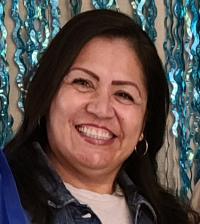
During that time, I became a parent partner. I worked for a Wraparound program for about seven years and witnessed significant change and transformation in families. I later became a senior parent partner, supporting staff and contract providers throughout the Riverside area. At UC Davis, I now bring the parent partner perspective to our in-house Wraparound trainings.
My experience has helped me understand the importance of looking beyond what is on paper—in files, on forms or on referrals.
I remember a family whose referral raised concerns about staff safety because the case seemed so intense. One clinician said, “No, I can work with them.” The team began working with the family, and the situation was nothing like what had been written in the report. That parent later became a parent partner and was great at the work.
We need to look beyond the file and see the family behind it.
We also need to look at ourselves. When supporting parent partners and other Wraparound professionals, I have always stressed the importance of self-awareness. We need to strengthen that muscle and understand where we are because our state of mind can affect the families we support.
We cannot preach something we do not practice. I challenge myself to practice what I tell others because I have seen the results. We have to be positive role models, especially as parents. We want our children to change, but if we do not change, how can we expect them to do it?
We are the pillars and positive role models for our children.
2. Listen
If we pay attention, we can hear the underlying unmet need. Families are often vulnerable and open with us. We need to pay attention to what they are saying, observe their living situation and really listen from the heart.
We should not enter a family’s life thinking we already know what they need or saying, “Here is what you need to do.” We need to ask what they need, meet them where they are and honor the first Wraparound principle: Family Voice and Choice.
I learned that through my own experience. At the time my family received Wraparound services, my marriage was struggling. I had been proactive about seeking marriage counseling and spiritual support.
During a meeting, the parent partner assigned to me said, “What you need is marriage counseling.”
I told her she was barking up the wrong tree because she did not know what I had already been doing.
That experience taught me not to judge families or impose my beliefs on them. We should not open our mouths just to say something. We need to listen and ask: What have you already done? What has worked? What has not worked?
Then we can begin there instead of trying to reinvent the wheel.
3. Learn
One of the most important lessons I have learned is to never give up on families.
A couple of years ago, my son was at the bottom of the bottom. He told me, “Mom, if I were my own parent, I would have given up on myself a long time ago. You haven’t. I don’t know how you are still here.”
I connected that with Wraparound. When we work with families, we are the crutch. We hold hope for them because they are down. We come in and help lift them so they can see that they can do this.
Even when families do not believe they can succeed, we hold the hope and refuse to give up on them.
We are the fuel of hope for families. We remind them that they can do it. We do not give up because other programs may have already given up on them. It is important for us to be persistent and say, “No matter what, here we are.”
People sometimes talk about the light at the end of the tunnel. But I remember people telling me that and thinking, “What light? I don’t see anything.” Sometimes, we need to find another way to say it—one that meets the family where they are.
I have also learned that families do not have to complete all four phases of Wraparound for the process to make a difference. My family did not complete the four phases. We barely made it through the first phase and half of the next one. But the seed was planted, and that was more than enough.
It is not the quantity; it is the quality.
My son is now a truck driver, and I am very proud of him. He is working on his sobriety. Again, it is about not giving up, staying there and holding the hope.
At the same time, I ask myself whether I am empowering, enabling or becoming codependent. Where am I when I provide that support?
Wraparound is about empowering families so they can succeed on their own. But at the beginning, we may be carrying them.
Throughout the process, we teach families and remind them that they can do it. They may have faced so many failures that they have lost confidence in themselves. That is why we are there—to support them through the process.
I also want to make sure that, once I am out of a family’s life, the family can sustain the skills and strategies we worked on together.
That is true empowerment.
Do you have your own Wraparound story that you'd like to share? Submit our quick survey (choose "RCFFP") so we can find out more, contact you and possibly share your story with our larger community!