

Opening Keynote Speaker: Vannessa Dorantes
From the Front Door to the Cabinet: Lessons Learned Ending Three Decades of Federal Oversight
What does it take to end 30 years of federal oversight? More than meeting benchmarks, it requires reimagining accountability itself.
After three decades under a federal consent decree, Connecticut’s child welfare system achieved sustained reform rooted not in compliance, but in culture change. In this keynote, former Commissioner Vannessa Dorantes traces her journey from frontline case manager to Cabinet leader, sharing how disciplined use of data, equity-centered analysis and an unwavering focus on families transformed a court-monitored system into one accountable to its communities.
As states advance commitments to continuous quality improvement, prevention and reducing family separation, this session offers a timely lesson: sustainable reform is possible when cross-system leadership, measurable outcomes and cultural transformation work in tandem. Dorantes provides a practical blueprint for jurisdictions seeking to move beyond mandates and achieve lasting impact for children and families.

Vannessa Dorantes, LMSW, is managing director of strategic consulting and systems improvement at Casey Family Programs. She joined Casey in 2024 after serving as commissioner of the Connecticut department of children and families. Dorantes led the agency’s exit from a three-decade federal consent decree and chaired the Governor’s Kids Cabinet. She previously served as regional administrator and held every position in the department’s social work job class across more than 30 years.
Dorantes oversees strategic consultants supporting multiple states and jurisdictions nationwide. She serves on the boards of the Child Welfare League of America and the American Public Human Services Association, where she chaired the National Association of Public Child Welfare Administrators. She is a 2021 Casey Excellence for Children Award recipient.
Keynote Speakers: Anita Barbee, Barrett Johnson and Panel!
California Job Analysis and Job Redesign Pilot Study Results: Lessons Learned from Analysis of CQI and Implementation Evaluation Data
This panel and presentation session builds on last year’s CQI Conference and examines the child welfare job redesign pilot currently underway in four counties: San Diego, San Luis Obispo, Sonoma and Mendocino. Using a data-informed approach grounded in continuous quality improvement, each county is redesigning the child welfare social worker role to better support workforce effectiveness and outcomes.
Anita Barbee will open the presentation with an overview of job redesign and its application in human services, followed by a summary of evaluation methods and early findings across the four counties. The session will conclude with a panel discussion facilitated by Barrett Johnson and featuring county and workforce leaders who will share insights from participating in the pilot, lessons learned through job analysis and implementation and their goals for the next phase of this initiative.
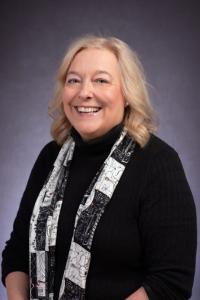
Anita Barbee, Ph.D., is a professor, distinguished university scholar and Ph.D. program director at the University of Louisville Kent School of Social Work and Family Science. Her research and practice focus on the child welfare workforce. Since 1992, she has evaluated training, practice and workforce innovations across tribes, states and counties nationwide. From 2013 to 2024, Barbee worked with CFPIC to develop and implement the California Core Practice Model. From 2016 to 2023, she served as lead evaluator for the Children’s Bureau–funded Quality Improvement Center for Workforce Development. In 2024, she joined the Children’s Bureau Center for Workforce Excellence and Leadership to co-lead recruitment and onboarding and began consulting with the Children’s Bureau–funded National Child Welfare Center for Innovation and Advancement. She has partnered with CDSS and CWDA on workforce and job redesign since 2023.
- Meet the Panel!
Panel Facilitator Barrett Johnson, MSW, LCSW, has more than 25 years of experience in child welfare practice and leadership. He previously served as program director for San Francisco’s Family and Children’s Services Division, overseeing program development, evaluation, policy and workforce development. During 14 years directing the In-Service Training Project at CalSWEC, Johnson helped lead development of the Common Core Curriculum for Child Welfare and the California Child Welfare Core Practice Model.
Renée Alger, Ph.D., holds a doctorate in human services focused on social policy, analysis and planning. She has more than 15 years of experience across economic assistance, adult and aging services and maternal, child and adolescent health. Alger now serves as deputy director for family and children’s services in Mendocino County.
Becky Antle, Ph.D., is a professor, university scholar and director of the Center for Family and Community Well-Being at the University of Louisville Kent School of Social Work and Family Science. Her work focuses on workforce development and organizational change across child welfare and related systems. Since 1997, Antle has evaluated training and practice initiatives nationwide and served as an evaluator for the Children’s Bureau–funded Quality Improvement Center for Workforce Development from 2016 to 2023.
Sarah Kneeland, M.S.W., is a policy analyst with the department of Child and Family Well-Being in the County of San Diego and has more than 15 years of child welfare experience. She helped develop, train, coach and implement Safety-Organized Practice in San Diego. Kneeland has served as a social worker and practice coach. In Special Projects, she has overseen workforce development, Safety-Organized Practice, Structured Decision Making, the local practice framework Safety Enhanced Together, the Title IV-E Waiver project and other system improvement efforts.
Holly Pesenti-Prieto is division manager with Child Welfare Services in San Luis Obispo County and has more than two decades of child welfare experience. She began her career with the county Department of Social Services in 1998 and has served as social worker, supervisor and program manager. Her work has included oversight of recovery services, recruitment and retention and resource family approval redesign. In 2024, Pesenti-Prieto was appointed as division manager for the Children’s Branch.
Keynote Speaker: Kevin Simmons
Reimagining CQI Through Indigenous Knowledge Systems: Belonging, Motivation and Sustainable Practice
This keynote invites participants to reimagine Continuous Quality Improvement through Indigenous knowledge systems rooted in belonging, relationship and shared accountability. Drawing from the Oregon Tribal Motivational Interviewing Project and the Native American Family Engagement Model, keynote speaker Kevin Simmons will demonstrate how culturally grounded training and community-driven CQI can strengthen workforce wellness, elevate practice and improve outcomes across child- and family-serving systems. Attendees will explore how Indigenous pedagogies and collaborative learning environments can support sustainable practice and deepen partnerships with communities most impacted by inequities.

Kevin Simmons, Ph.D., is an enrolled member of the Confederated Tribes of Grand Ronde of Oregon and a descendant of the Muckleshoot Tribe of Washington. A nationally recognized scholar, educator and advocate, his work centers on strengthening Native families and communities through culturally grounded education, child welfare and behavioral health initiatives. Simmons earned his Ph.D. in special education from the University of Oregon, with research focused on Indigenous knowledge systems and culturally responsive adaptations of evidence-based practice. His scholarship has appeared in peer-reviewed journals and national and international forums. He leads the Oregon Tribal Motivational Interviewing Project, supporting Oregon’s nine federally recognized tribes, and co-authored Honoring the Practice: Pathways to Tribal MI Quality Assurance. At the center of his work is the conviction that culture is intervention—that Indigenous knowledge, relational accountability and tribally defined quality assurance are vital for healing, resilience and transformation in child welfare systems.
Learn more about the 2026 CQI Statewide Conference for Child Welfare and Probation